What if your edge wasn't specializing, but seeing the whole?
In a world pushing you toward hyper-specialization, the deep generalist is the one who connects disciplines and sees patterns others miss. From rugby fields to the first Uruguayan unicorn: a map, not a memoir.
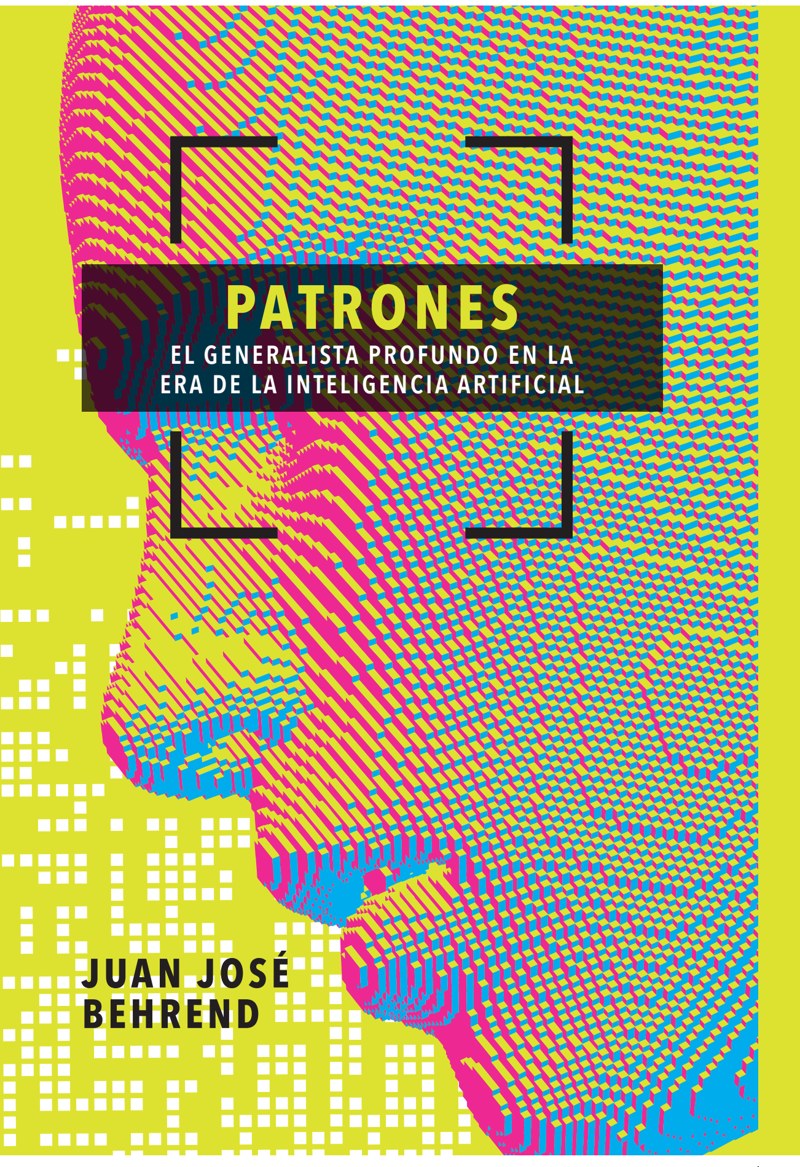
AI isn't coming to replace you. It's coming to amplify the one who connects worlds.
Through the journey of an entrepreneur who navigated from rugby fields to tech unicorns —dLocal, PedidosYa, Farmashop, Akua— this book shows how to turn the breadth of your knowledge into your most powerful competitive advantage.
272 pages in five parts: what patterns are and why AI doesn't think; the silent generalist revolution; whether generalists are born or made; the full path of a generalist in the trenches; and a toolbox to become one.
- How to turn the breadth of your knowledge into your superpower.
- How to use AI to amplify holistic thinking: prompting and orchestrating multiple AIs.
- The method and the 60-20-20 rule for investing your learning time.
- The quantitative framework to decide when a problem needs a generalist, a specialist, or a hybrid team.
- Why the next unicorns will be born at the intersection of disciplines.
Try generalism in action
Three interactive tools from Part V of the book. No signup, no fuss.
Generalist test
The 15 questions from chapter 22. Answer from 1 (never) to 5 (always) and discover your profile.
From I to X: knowledge profiles
The shared language for talking about breadth and depth. Which one are you today, and which are you heading toward?
I-shaped profile (specialist)
Expert depth in a single domain, little breadth. Essential when the problem is well defined and lives inside one discipline: the vertical bar of the "I" is all depth.
T-shaped profile
Depth in one area (the vertical bar) plus functional breadth across others (the horizontal bar): they know enough of other disciplines to collaborate. The starting point for most generalists.
Popularized by David Guest (1991) and Tim Brown, CEO of IDEO.π-shaped profile (Pi)
Two deep legs —say, tech and business— joined by a layer of breadth. They can already translate between two worlds and spot opportunities neither sees alone.
Comb/M-shaped profile
Several real depth spikes over a broad base. The shape closest to the deep generalist: multiple domains truly worked, not just heard about.
X-shaped profile
Technical depth combined with leadership: the person who crosses disciplines and also mobilizes teams. Common in founders and CTOs who came up through the trenches.
Deep generalist
The book's central idea: someone who dives deep enough into multiple disciplines to see patterns others miss and build bridges where others see chasms. Not knowing a little of a lot: multi-depth + synthesis.
Patterns, J.J. Behrend — chapters 1 and 3.Polymath
Genuine mastery across very different fields —the archetype is Leonardo da Vinci—. The deep generalist is the pragmatic modern version: focused on solving problems, not collecting knowledge.
Analogical transfer
Solving a problem in domain A with a pattern learned in domain B: the mechanics of a distribution network applied to supermarket shelves. The muscle the book trains chapter by chapter.
Range (breadth)
David Epstein's thesis: in "wicked" domains (shifting rules, ambiguous feedback) generalists outperform specialists. Patterns extends that thesis to the AI era and the Latin American arena.
Range, D. Epstein (2019) — recommended companion reading.Unfair speed
What a generalist achieves when AI joins as a partner: going deep in a new domain in weeks, orchestrating several intelligences at once and moving at a pace that looks like cheating. It isn't: it's method.
Patterns, J.J. Behrend — chapters 23 and 24.The metric that matters: connections
A specialist who learns ten things has ten tools. A generalist who learns ten things has 45 possible connections between them. Success isn't measured in skills learned: it's measured in connections created.
Patterns, J.J. Behrend — chapter 25.60-20-20 rule
How a deep generalist splits their learning time: 60% going deep in strong areas, 20% exploring new fields, 20% on synthesis projects that combine several areas.
Patterns, J.J. Behrend — chapter 25.Start reading today
Chapter 1: What are patterns?
The full prologue and first chapter, with the book's central thesis: patterns repeat, only the disguise changes.
Download chapterDeep Generalist Manifesto
The 10 principles from the epilogue on a single page, ready to print and hang above your desk.
Download manifestoThe 3 tools from the book
Generalist test, generalist-vs-specialist calculator and learning ROI, straight from Part V.
Use the toolsBuy "Patterns"
Shipping available only within Uruguay. Pay via secure checkout.
Where to buy it by country
English (Patterns) and Portuguese (Padrões) editions — coming soon.
🎁 Purchase bonuses
Already bought the book? Forward your receipt to and get:juanjo@akua.la
- "The applied framework" guide: template to use the two formulas from chapter 25 on your real career and project decisions.
- Printable Manifesto poster in high resolution.
- 5-email series with one pattern per week to train the generalist eye.
Want copies for your team? Corporate packs with dedication and optional talk: .juanjo@akua.la
Juan José Behrend

Juanjo is cofounder of Akua — a payments infrastructure company whose technology is comparable to Stripe, ACI and Finix, with AI at the core — rebuilding how LatAm moves money. In under two years they've raised $13M, shipped in 5 markets and grown to 70+ people; AWS named them one of the companies worldwide making the best use of AI and industry press calls them one of the fastest-moving fintechs in the region. Before Akua he was inside the LatAm equivalents of the companies Silicon Valley knows by heart: dLocal (LatAm's Stripe/Adyen/Worldpay) when it became Uruguay's first unicorn, leading 150+ engineers; Pomelo (the LatAm Marqeta / Stripe Issuing) on card infrastructure; PedidosYa (LatAm's DoorDash) at hyper-growth; and Farmashop (Uruguay's CVS/Walgreens), where he built the tech org from zero.
At 18 he founded his first IT services company. He learned to code, to negotiate contracts, to deal with banks and to see that solving real problems requires speaking many languages: code, business, regulation, people. His thesis project won the award for the best engineering project in Uruguay.
He has taught at universities and mentored dozens of projects. He doesn't just teach tech or business: he teaches how to see patterns, how to connect worlds that look separate. He writes this book from the practice of what worked — between code and strategy, between building startups and scaling companies — not from the theory of what might work.
"The deepest innovations don't happen in silos of specialization, but in the in-between spaces where different disciplines meet."
He lives in Montevideo, Uruguay, with his wife and two daughters. When AI changed the rules, he decided to share what he learned about being a generalist in a world that asks you to specialize: what he calls an "unfair speed".
The road (patterns in person)
- Rugby Player — National TeamLeadership, team and "no half-throttle" — before turning 20.
- First company at 18IT services: code, contracts, banks. And the first failure that became fuel.
- Farmashop (LatAm CVS / Walgreens)Built the tech org from scratch in Uruguay's largest pharmacy chain — retail at national scale as the first real lab.
- PedidosYa (LatAm DoorDash)Scaling infrastructure inside the region's biggest food-delivery platform through hypergrowth.
- dLocal (LatAm Stripe / Adyen / Worldpay)Uruguay's first unicorn. Led 150+ engineers and lived the definitive cross-border payments patterns lab.
- Pomelo (LatAm Marqeta / Stripe Issuing)Tech leadership on card-issuing infrastructure for LatAm fintechs and banks.
- Akua (tech comparable to Stripe, ACI, Finix — AI at the core)Cofounder. AI-native payments infrastructure for Latin America — where every pattern from the previous stops finally converges.
- Patterns, the bookThe map of that whole journey, written for the AI era.
Get generalist tools by email
Once a month: one pattern, one tool from the book, and what I'm learning building Akua. No spam.